
Mastering interrupt coordination in World of Warcraft is the single most important progression path for surviving Mythic Plus. In a system where a single missed “Greater Fireball” or “Shadow Bolt” can delete a teammate, the responsibility for interrupting cannot be left to chance. For players aiming to succeed in the chaotic world of “Pugging” (random matchmaking), developing an “Interrupt-First” protocol forms a reliable framework for mastery. It is about understanding that a kick today prevents a wipe tomorrow.
This guide examines how to approach interrupt management efficiently, focusing on the logic of “Kick-Order,” the use of visual tracking, and the strategic importance of the “Backup-Kick” to ensure your group’s safety even without voice communication.
The Logic of Deterministic Kicking
Interrupting is not a competitive sport; it is a collaborative defensive requirement. Many players fail because they “double-kick”—two people using their interrupt on the same cast—leaving the next spell free to go off. Successful interrupt responsibility uses a deterministic strategy to divide the labor. By establishing a simple order (e.g., Tank kicks first, Melee 1 kicks second), you ensure that your group’s limited interrupt resources are spent with 100% efficiency. This clarity of purpose removes the “wait-and-see” hesitation that leads to missed casts.
Core Tactics: Focus-Kicking and Nameplate Awareness
To manage interrupts effectively in a disorganized group, you must utilize these specific mechanical habits:
- Focus-Target Interrupting: Set the primary caster in a pack as your “Focus” target. This allows you to monitor their cast bar regardless of which mob you are currently attacking. This is the most reliable way to catch a lethal spell while maintaining your DPS rotation.
- The “Ping-Kick” Communication: In groups without voice chat, use the “Ping” system to mark a mob. A specific marker (like the Skull or X) should universally mean “I have the next kick on this target.” This visual cue provides the coordination needed to prevent double-kicking.
- Nameplate Scaling for Casters: Adjust your UI to make caster nameplates slightly larger or a different color. This visual hierarchy forces your brain to prioritize their cast bars over the “noise” of the rest of the fight, ensuring you never miss a priority interrupt.
Managing the “High-Priority” Target List
Not all casts are equal. Interrupt responsibility requires you to know which spells are “Optional” and which are “Mandatory.” Mandatory casts are those that cause AoE damage, fears, or significant healing to the pack. Optional casts are single-target bolts that your healer can manage. A veteran player never wastes their 15-second cooldown on a minor bolt if a mandatory cast is coming up in five seconds. Learning this hierarchy of spells is the foundation of become an “Interrupt Master.” By strictly following the mandatory-first rule, you provide your healer with the breathing room needed to keep the group alive through the messy parts of the fight.
The “Safety-Net” Kick: Watching for Misses
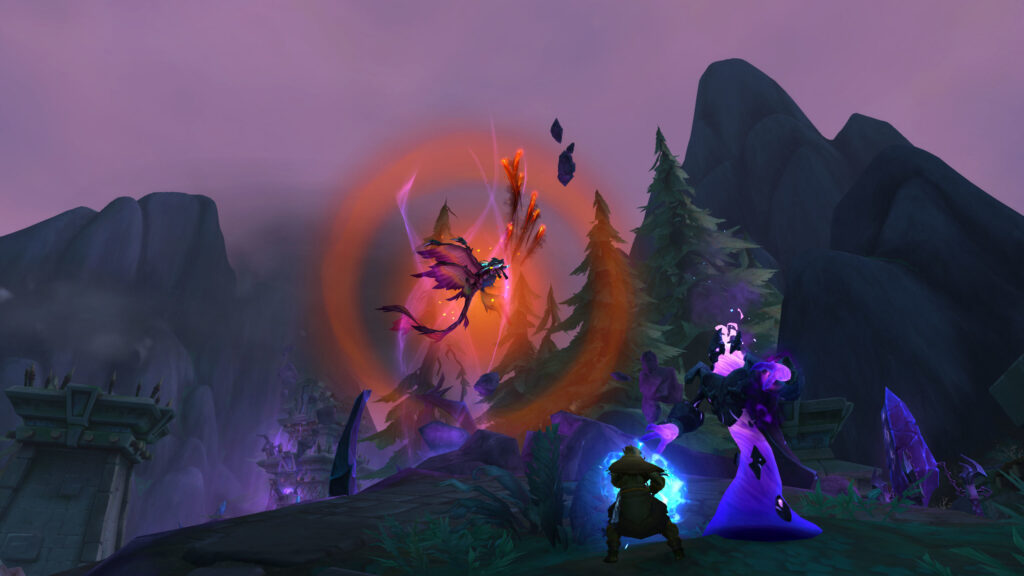
The final phase of interrupt mastery is the “Safety-Net.” This involves watching your teammates’ interrupt cooldowns (using addons like OmniCD). If you see that your partner has just used their kick, you know you are now 100% responsible for the next cast. Conversely, if you see two teammates still have their kicks ready, you can afford to hold yours for a secondary target. This level of informational awareness turns you into a “tactical gap-filler,” ensuring that no matter how disorganized the rest of the group is, the priority casts never go off. Integrating these observation habits into your routine ensures your success in every keystone run.
Conclusion: Victory Through Coordination
Interrupt responsibility rewards the disciplined and the observant. By establishing a clear kick order and utilizing visual tracking tools, you nullify the most common cause of dungeon failure. Integrating these coordination habits into your routine ensures that you remain a dependable asset to any group, providing a stable path to high-level mastery through superior interrupt discipline.